
Design matters. So does where. And so does why.
By Susan Vanhuston, Co-founder, The DMC Collective
A few years ago, an IT distributor asked us to design a reward for its top sales performers. The group was young and well travelled. A beautiful hotel alone would not impress them.
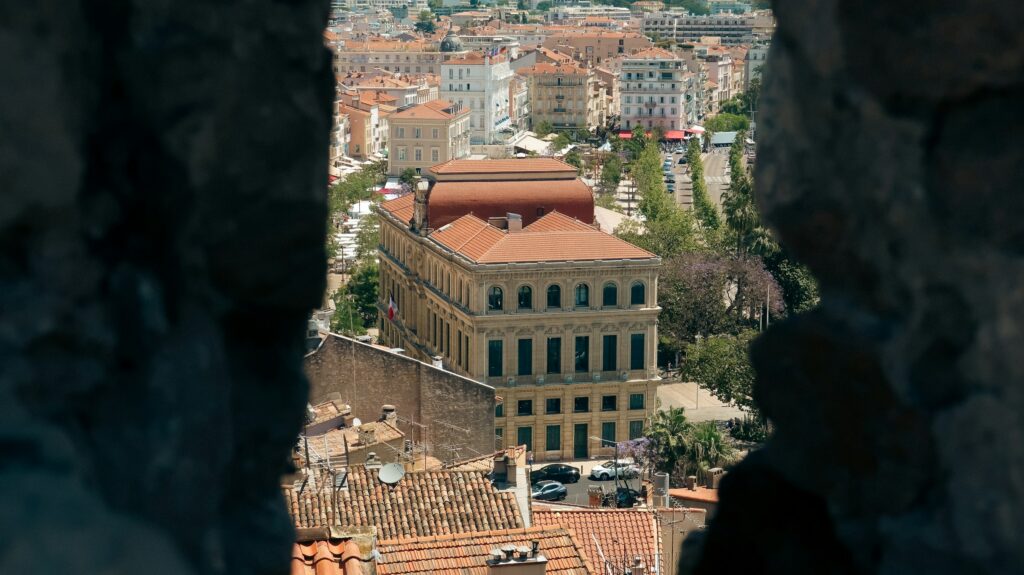
So the trip began long before anyone boarded a plane. Small teasers went out to the sales team in the months before, each one a hint of what was waiting. The message was simple: one final push, and a seat on that plane is yours. Only when the winners were announced did they see the full five days in Cannes.
In German we have a word for what that created: Vorfreude. The joy of looking forward to something. By the time the group arrived at the Hotel Martinez, the trip had already done half its work.
Then came the part nobody expected. In the town that hosts the world’s most famous film festival, the group made their own black-and-white short film. They were not watching Cannes. For a few days, they were part of its story.
Afterwards, the people on that trip reached between 105% and 355% of their sales targets. Twelve of them doubled their targets and said the trip was the reason. You can read the full case study here.
It was a good hotel and a beautiful place. But that is not what made it work. It worked because it had a story.
Where is the canvas. Why is the painting.
In October, on the eve of IMEX America, I wrote that the place an event happens shapes how people behave: their pace, how close they become, how they think, and whether they rest. I still believe every word of it. Where you go is never just logistics.
But a great place is only half of it. Two programmes can share the same hotel, the same lake and the same dates, and one will be forgotten by Christmas while the other is still talked about years later. The difference is almost never the budget. It is whether the trip means something.
The industry’s own research hints at a gap here. In the 2026 Incentive Travel Index from the IRF and SITE, only 39.9% of buyers said their choice of destination was highly aligned with what their qualifiers would choose for themselves. Most (56.8%) said logistics, cost and company priorities often win. We looked at the wider findings for Europe here.
That is not a criticism of anyone. It is simply how incentive trips for employees are usually built: from the outside in. A destination, then a hotel, then activities to fill the days. The story, if there is one, comes last.
I think it should come first.
Four principles of event storytelling for incentive trips
Event storytelling is not about a theme night or a logo on a welcome gift. It is the thread that connects every choice, so that people feel the trip was made for them. When we design incentive trips for employees, four questions shape everything else. We call them the four Ps.
1. Purpose: what is this trip celebrating?
Every incentive celebrates something. A record year. A difficult year that the team came through together. A new chapter for the company. The answer changes everything, from the pace of the days to the tone of the last evening.
A trip that says “you are the best” feels very different from one that says “we could not have done this without you”. Both are good. But they are not the same trip, and qualifiers can feel the difference.
We have written more about why the purpose has to come before the venue in Define the Why Before You Book the Venue.
2. People: who has earned this, and what would they choose?
Before we suggest a single hotel, we ask who is travelling. Not job titles, but people. How old are they? How well travelled? What did they love on past trips, and what did they quietly not enjoy? Which language do they dream in?
For a C-level retreat we designed, the answers came from the guests themselves. Eight weeks before departure, each executive spoke candidly to a camera about their fears, the business and their colleagues. By the time they arrived, the walls were already down.
The best moments are the ones that could only belong to this group. When Prestige Group, one of India’s leading real estate developers, brought 150 of its top performers to Lake Tegernsee, the final night was not a Bavarian evening. It was a Bollywood-themed gala at the Clubhaus on the lake: a celebration of where they came from, in the place they had travelled to.
Or take the Basque Country, where a bertsolari (an improvising poet) can sing verses created on the spot about any subject you give them. Give one your team’s year, and they will sing it back to the room at dinner. Nobody in that room will ever hear that song again. It was made for them. We compared the region’s two cities in Bilbao vs San Sebastián for corporate events.
3. Plot: tell the trip in chapters, not days
Most itineraries read like a timetable: day one, day two, day three. A story has chapters, and each chapter has a feeling.
For Prestige Group, we built the whole programme around Joseph Campbell’s Hero’s Journey. Five days at Lake Tegernsee became four chapters. The Call to Adventure, stepping out of the comfort zone. Initiation and Growth, with leadership sessions and mindfulness by the lake. Trials and Triumphs: a scavenger hunt through the streets of Salzburg and a descent into the Berchtesgaden salt mines. And finally the Grand Return, with renewed focus and a clear plan for the year ahead.
Every activity had a place in the story. Salzburg was not a sightseeing day; it was a test of teamwork. The salt mine was not a tour; it was a lesson in resilience, deep under the Alps.
This is what a good incentive trip theme looks like. It is not decoration; it is structure. It tells you which experience belongs on which day, which one should come last, and what should be left out.
The same thinking works at scale. For a technology company’s President’s Club, held in waves across Cannes, Berlin, Singapore and Melbourne, we used immersive theatre and built sets in empty outdoor spaces, so each wave stepped into a story rather than a venue.
And remember that the story starts before departure. As Cannes showed, the weeks of anticipation are part of the trip. They are also free.
Planning an incentive for 2027 or 2028? Our planners live in the places they plan for, and many were born there. Tell us what your team achieved this year, and we will tell you what kind of story it could become. Talk to us
4. Proof: what do people take home?
A story needs an ending, and a good ending is something people can keep.
Sometimes that is an object: a scarf they painted themselves, a film they made, a framed photograph of their team on the water. Sometimes it is a commitment: at Lake Tegernsee, each Prestige Group leader left with a personal action plan for the year ahead, the last page of their own Hero’s Journey. And sometimes it is a feeling that shows up in next year’s numbers.
Proof matters for the business too. The people who sign off company incentive trips want to know they worked. So agree from the start what success looks like: sales against target, retention of top performers, or simply how many people want to qualify next year. When a trip has a clear story, it is much easier to show what it achieved.
Why this matters for 2027 and 2028
Most companies are setting their 2027 incentive budgets now, and larger programmes for 2028 are already on the table. The outlook is careful rather than gloomy. In the same Incentive Travel Index, most buyers (52.1%) expect their 2027 budgets only to keep pace with inflation, and almost a third (30.7%) plan to trim. Looking further ahead, 39.4% expect more incentive activity by 2028. In Western Europe, buyers are more cautious: it is the only region where fewer expect growth in 2028 (22.7%) than in 2027 (24.0%).
When there is less to spend, it is tempting to cut the parts that feel optional. In my experience, the story is the last thing you should cut. It costs very little, and it is what turns a nice trip into a reward people work for. A smaller programme with a clear story will almost always be remembered longer than a bigger one without it.
There is also a practical reason to start with the story now. The best hotels, private venues and local partners for spring and autumn 2027 are already being booked. For a group of 150, as at Lake Tegernsee, the story decides which venues you need, so it should be settled before the contracts are signed. For 2028, you still have the luxury of time, and that is when a story-led programme is easiest to build.
Five questions to ask before planning incentive trips for employees
If you are planning a programme for 2027 or 2028, these are the questions I would put at the top of the brief, before the destination, the hotel or the activities:
- What are we celebrating?
Name it in one sentence. - Who has earned this, and what would they choose for themselves?
Ask them, if you can. - What is the first chapter, and when does it start?
Usually long before the flight. - What will people carry home?
Something to keep, and something to talk about. - How will we know it worked?
Agree on it before you book anything.
If your partner asks you these questions first, you are in good hands. If they send you a list of hotels instead, ask them anyway.
Let’s find your story
Our planners are local to the destinations we serve, and many of them were born there. They know the poet who will sing about your team, the streets of Salzburg that make the best scavenger hunt, and the moment in the programme where people will stop and look at each other.
Tell us who is travelling and what you are celebrating, and we will come back with a story, not just an itinerary. Talk to our team or email info@thedmccollective.com.
I would also love to hear from you in the comments: what is the one moment from an incentive trip that people still talk about?
Frequently asked questions
What makes incentive trips for employees effective?
A clear reason for the trip, experiences designed around the people who earned it, and a story that connects the days. When those are in place, a trip is remembered and talked about, and it motivates the next round of qualifiers.
What are good incentive trip themes?
The best themes come from the company’s own story rather than a catalogue: a record year, a turnaround, a new chapter, or the company’s own products and values. A good theme gives the trip a beginning, a middle and an ending, and shapes which experiences belong where.
How far ahead should we plan incentive trips for employees for 2027 and 2028?
For most European programmes, six to nine months ahead is comfortable, and longer for large groups, exclusive venues or peak dates. That means spring and summer 2027 programmes should be in planning now. For 2028, starting early leaves time to build the story first and choose the destination to fit it.
Who designs bespoke incentive trips for companies?
Destination management companies (DMCs) and specialist incentive agencies design bespoke incentive trips. At The DMC Collective, our local planners design each programme around the company’s purpose and its people, and deliver it on the ground. How to choose a DMC explains what to look for.
Susan Vanhuston is Co-founder of The DMC Collective, a Berlin-based destination management company that designs incentives, corporate meetings and corporate wellness retreats in Europe’s most remarkable lesser-known destinations. A native German, she believes the best incentive trips are built like a good story: with purpose, with care for every detail, and with an ending people keep.