
On the eve of IMEX America 2026: why your next corporate retreat in Europe should start with a place you haven’t used yet
By Susan Vanhuston, Co-founder, The DMC Collective
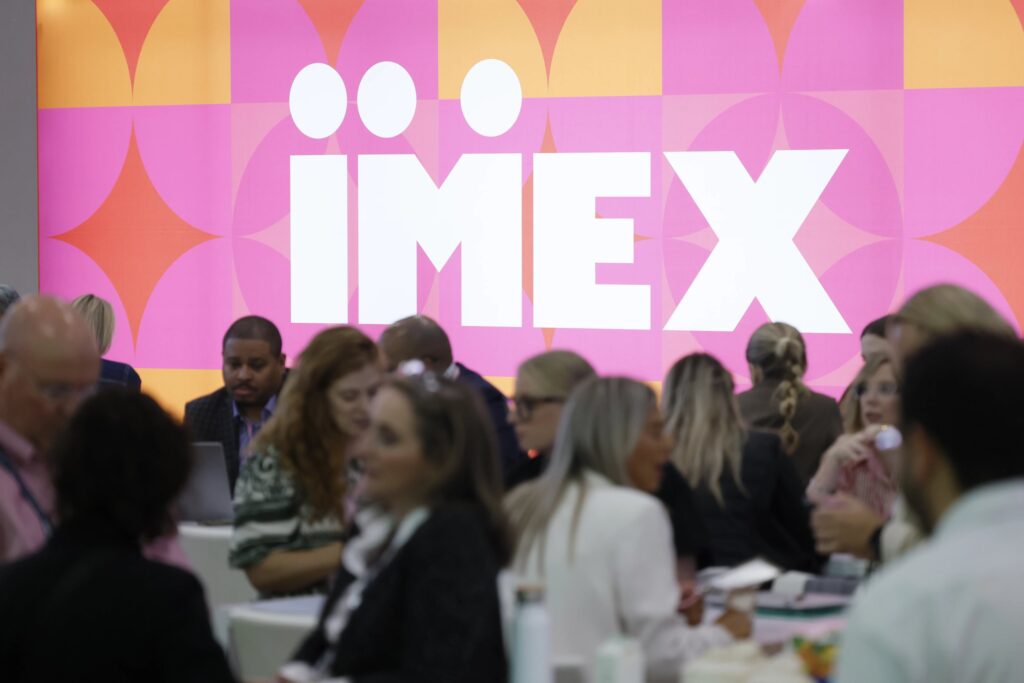
On Tuesday morning, the doors will open on the show floor at Mandalay Bay. More than 17,000 meeting and event professionals are expected in Las Vegas for IMEX America 2026, gathering under a theme that couldn’t suit our industry better: Design Matters. The lighting will be perfect, the sound flawless, the coffee strong.
Now picture a second room. It’s 7 a.m. in a boathouse on the edge of Lake Tegernsee, an hour south of Munich. Fourteen executives sit with their coffee as the mist lifts off the water. Nobody is checking a phone. Their agenda is identical to one they could have run in a hotel by the airport. Yet by lunchtime they’re having a conversation that had been stuck for months.
Same agenda. Different room. A completely different event.
On the eve of IMEX, I want to talk about that second room, because it reveals a design decision that rarely gets a session of its own, even though it shapes every other choice we make.
Where.
The missing chapter in “Design Matters”
IMEX calls design the ultimate differentiator: the thing that helps events stand out and be remembered. This week’s education program reflects that beautifully. There are tracks on experience design, designing for human needs, and regenerative design, and even one on designing for spectacle, fittingly hosted by a city that does spectacle better than anywhere on Earth.
Look closely, though, and almost all of that design happens inside the room: the stage, the content, the flow, the food and beverage. The destination usually enters the process much earlier, filed under logistics: dates, airlift, room block, rate. By the time the creative work begins, the most influential design decision has already been made, often by a spreadsheet.
I think that’s backwards. The place an event happens shapes how people move, how quickly they open up, who they bump into, and what they remember. The destination isn’t the frame around the design. It is the canvas. And four things planners are being asked for right now make that truer than ever.
What the 2027 brief is really asking for
When planners describe their briefs for next year, I hear the same four requests again and again.
“Give us somewhere new.” Attendees have done the greatest hits, and incentive travel qualifiers most of all. In the 2025 Incentive Travel Index from the IRF and SITE, nearly 70% of buyers said they were actively seeking destinations they had never used before, and 63% had already booked a new one for 2026 or 2027. The 2026 edition is due to launch in Las Vegas this week, and I’ll be fascinated to see whether the appetite for new incentive destinations in 2027 has grown.
“Make it feel personal.” Skift Meetings named micro events, curated gatherings of roughly 10 to 100 people, one of its megatrends for 2026, as planners trade spectacle for substance. One life sciences event director told Skift that events of under 50 people are making a comeback.
“Keep everyone safe, and make the journey easy.” MMGY Travel Intelligence’s 2026 research found that safety concerns are approaching cost as a barrier to attending events, and incentive buyers rank personal safety as their top destination criterion.
“Send people home better than they arrived.” Wellbeing has moved from nice-to-have to must-prove. This year IMEX is expanding its wellness space into Circadian Cove Rx, with medical-grade programming and a physician on site. Its co-creator, David T. Stevens, puts it plainly: if you can’t show that wellness supports the business outcome, it’s the first thing cut from the budget. And he’s right about the outcome. Exhausted people don’t make good decisions, build trust, or remember what they heard.
Read those four requests together and something stands out. None of them can be solved in a ballroom.
You can’t stage novelty with lighting. You can’t make 40 people feel like the only group in town in a hotel with 3,000 rooms. You can’t manufacture calm, or daylight, or a walk by the water between sessions.
Every one of them is answered, or not, by where you choose to go.
Four things a place designs for you
So what does a destination actually do? In our work designing corporate retreats in Europe, I see it shape four things that no run of show can fully control.
Pace. A lakeside town or a small island moves at a different speed from a convention district. Walkable streets, short transfers, and no queue for the elevator give people back the time between sessions, and that’s when the best conversations happen.
Proximity. When yours is the only group in the venue, people stop behaving like delegates and start behaving like a team. They share tables, run into each other on the terrace, and talk across departments without being asked to.
Perspective. Caitlin Krause, who gives Monday’s MPI keynote at IMEX, talks about designing for awe and wonder. The right landscape does much of that work for you. A fjord, a mountain lake, or a medieval square changes the way people think about the problem they came to solve. You can design a session to provoke new thinking. A view simply does it.
Pause. This is the one most programs forget, and the one we care about most. Recovery doesn’t happen in a breakout room with no windows. It happens on a morning walk by the lake, in a sauna after a long session, over a slow lunch outdoors, or simply with enough daylight and quiet to think. When wellbeing is designed into the place, the rhythm of the day, and the food on the table, it stops being an add-on that finance can cut. It becomes the reason people arrive at the afternoon session with something left to give.
Corporate retreats in Europe, beyond the postcard
This is where I’ll admit my bias. As a destination management company in Europe, The DMC Collective spends its days in exactly these kinds of places: Europe’s lesser-known destinations, where a group of 30 or 80 still feels like a discovery. Whether the brief is an incentive trip, a leadership offsite, or a corporate retreat in Europe, the right place does the heavy lifting.
That might be a leadership retreat on Lake Tegernsee, where the Alps do half the facilitation. It might be Croatia’s islands in the shoulder season, when the coastline feels like yours alone. Or it might be Italy beyond its famous cities, in towns where dinner is cooked by people who know your group’s names.
Corporate wellness retreats in Europe: wellbeing by design
And more and more, it’s a corporate wellness retreat in Norway, Bavaria, or along the Adriatic, where the program follows the natural rhythm of the place: active mornings outdoors, focused sessions when energy is high, and real rest when it dips. For us, wellness isn’t a lounge in the corner or a yoga class on the last day. It’s part of how we design every event, because a team that comes home restored is the clearest return on investment there is.
What these places share isn’t just scenery. They answer the brief (new, personal, calm, and restorative) before a single session has been designed.
Back to the boathouse
This week, Las Vegas will remind us all, once again, why people still cross oceans to sit in a room together.
But when you sketch out your 2027 programs, I’d encourage you to put one question at the very top of the design brief, before the theme, the speakers, or the swag:
Where would this event become something people never forget?
Design matters. So does where.
Whether you’re walking the show floor in Las Vegas or following IMEX from afar, I’d love to hear your answer in the comments: what’s the most unexpected destination that transformed one of your events?
Planning a corporate retreat in Europe for 2027? Talk to our team about the places your group hasn’t been yet.
Susan Vanhuston is Co-founder of The DMC Collective, a Berlin-based destination management company that designs corporate meetings, incentives, and corporate wellness retreats in Europe’s most remarkable lesser-known destinations.
Five questions to ask a DMC at IMEX America
If you’re walking the IMEX floor this week, here are the questions I’d love planners to ask any destination management company, ours included:
- What would you recommend that I haven’t heard of?
If every answer is the obvious one, keep walking. - How will this place change the way my group behaves?
Listen for pace, proximity, and perspective, not just room counts. - What does the journey look like, door to door?
That means flights,transfers, and contingencies, for every attendee. - How do you design for different human needs?
Think accessibility, dietary requirements, neurodiversity, and time to rest. - How will we know it worked?
Good partners talk about outcomes, not just logistics.