
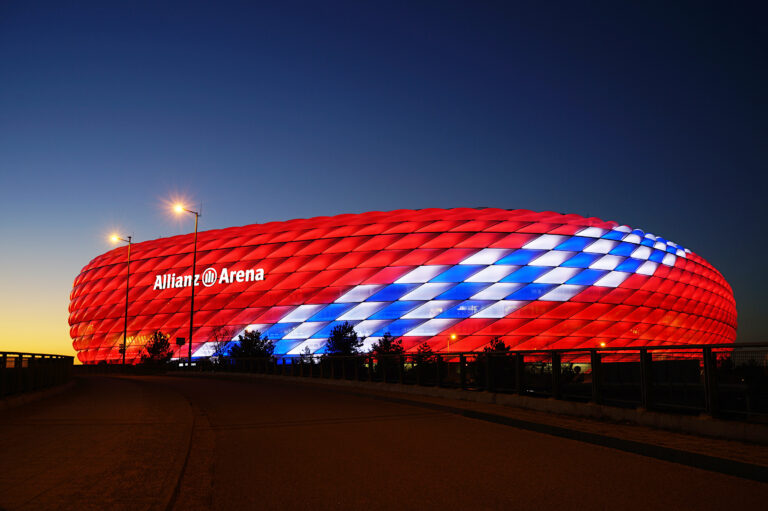
Corporate Event Planning Germany 2026: Real Costs DIY vs DMC for International Planners
Expert analysis from The DMC Collective, Berlin | For event planners globally
Planning a corporate event in Germany from London, Singapore, New York, Bangalore, Mumbai, or Shanghai presents a deceptively simple question: should you coordinate it yourself or work with a local Destination Management Company (DMC)?
On the surface, the maths looks straightforward. A DMC charges 10-15% of your event budget. For a €100,000 event, that’s €10,000-€15,000. Eliminate that fee, save that money. Simple, right?
Not in 2026.
Four major industry shifts are fundamentally changing the cost equation for international event planning in Germany—and most finance teams haven’t caught up yet. What looked like cost savings 18 months ago now often translates into hidden expenses that exceed what you’d pay a professional partner.
This article breaks down the real costs of DIY versus DMC partnership in 2026, accounting for new complexities that didn’t exist in 2024. Whether you’re planning your first Germany event or your fiftieth, understanding these shifts will save you money, time, and potentially your event’s success.
The 2026 Context: Why Event Planning Costs Have Changed
Before we dive into cost comparisons, you need to understand what’s different about 2026. These aren’t theoretical trends—they’re operational realities creating measurable cost impacts.
1. AI Integration: The New Baseline Standard (And Its Hidden Costs)
What changed in the past 18 months:
Artificial intelligence has moved from experimental tool to baseline expectation. In 2024, event teams were testing ChatGPT for session descriptions. In 2026, stakeholders expect AI-powered insights throughout the event lifecycle.
According to recent industry research, 66% of event professionals now use AI for high-value work. But here’s what most event planners miss: AI creates a capability gap between those who have it and those who don’t.
The cost implication for DIY planning:
If you’re planning from Singapore or New York without AI-powered tools, you’re competing against DMCs who use AI to: – Match requirements against venue databases in hours (not weeks) – Analyse historical pricing patterns to identify negotiation opportunities – Process post-event survey data to extract actionable insights – Identify engagement patterns that predict attendee satisfaction
💰 THE 2026 AI GAP COST
What this costs you: – Time inefficiency: 20-30 extra hours manually researching what AI surfaces instantly – Missed opportunities: Without pricing pattern analysis, you overpay by 10-15% – Suboptimal decisions: Manual analysis misses engagement correlations that AI identifies
At £40/hour (blended rate): 25 hours × £40 = £1,000 in lost productivity
Plus vendor overpayment: 12% on €80,000 in services = €9,600
Total 2026 AI gap cost: €10,600+
This didn’t exist in 2024. It’s a new cost category created by capability disparity.
Critical point: You can’t simply “buy AI tools” to close this gap. The value comes from AI plus local knowledge. AI can suggest 20 Berlin venues; only local expertise knows which ones have problematic acoustics, difficult venue managers, or hidden fees.
2. Sustainability Compliance: From Optional to Mandatory (With Real Penalties)
What changed in the past 18 months:
Sustainability reporting has shifted from corporate social responsibility initiative to regulatory compliance requirement. If you’re planning events for organisations in the UK, EU, Singapore, or publicly traded US companies, carbon tracking is increasingly mandatory.
Germany is leading this shift. Major venues like Messe München transitioned in late 2025 from voluntary “CO₂ neutrality by 2030” commitments to mandatory “Net Zero 2050” targets with interim reporting requirements.
The cost implication for DIY planning:
Sustainability compliance creates three new cost categories:
Cost 1: Initial Setup and Knowledge – Understanding which German venues have verifiable sustainability credentials (not just greenwashing) – Learning German sustainability certification systems (DGNB, LEED equivalents) – Building carbon calculation frameworks for events – Knowing which rail routes replace short-haul flights compliantly
DIY cost: 15-25 hours to research and understand = €600-€1,000 (at €40/hour)
DMC cost: €0 (included in service, already built into operations)
Cost 2: Ongoing Tracking and Reporting – Calculating carbon footprint per attendee (flights, ground transport, accommodation, catering) – Documenting sustainability measures for stakeholder reporting – Verifying vendor sustainability claims
DIY cost per event: 8-12 hours = €320-€480
DMC cost: €0 (automated within existing systems)
Cost 3: Risk of Non-Compliance – Choosing venues that claim sustainability but lack documentation – Missing mandatory reporting requirements – Stakeholder questions you can’t answer with data
Potential cost: Difficult to quantify, but reputational risk and potential regulatory penalties
🌱 SUSTAINABILITY COMPLIANCE COST BREAKDOWN
Cost Category | DIY Cost | DMC Cost |
|---|---|---|
Initial setup & knowledge | €600-€1,000 | €0 |
Per-event tracking | €320-€480 | €0 |
Risk of non-compliance | Reputational risk | Mitigated |
Total new sustainability compliance cost (DIY): €920-€1,480 per event
This category didn’t exist in meaningful form before 2025. It’s pure added cost.
Example from ITB Berlin 2026:
ITB Berlin (March 3-5, 2026) has sustainability as a core theme across 200+ sessions under “Leading Tourism into Balance.” If you’re planning a Germany event and your organisation will be attending or exhibiting at ITB, your sustainability story needs to be credible—not aspirational.
3. Cost Inflation Meets Budget Constraints: The Planner’s Paradox
What changed in the past 18 months:
Event costs are rising faster than budgets. According to industry data: – 72% of event professionals expect costs to rise by up to 20% in 2026 vs 2025 – Hotel rates in German business hubs projected to increase 3.9% in 2026 – Airfares expected to rise 2-3% – Ground transportation holding steady but sustainable options commanding premiums
Meanwhile, corporate travel budgets haven’t increased proportionally. Morgan Stanley research shows only 5% global budget increases, well below cost inflation.
The cost implication for DIY planning:
Budget pressure creates a hidden cost: the cost of suboptimal decisions made under financial stress.
When you’re planning DIY and costs come in higher than expected, you make compromises: – Choosing the cheaper venue (that has poor WiFi or difficult access) – Cutting the networking reception (that would have generated the highest attendee satisfaction) – Reducing on-site staffing (then scrambling when issues arise)
These don’t show up as line items, but they impact outcomes.
⚠️ REAL EXAMPLE: BUDGET OVERRUN SCENARIO
UK company, 180-person Berlin conference, DIY planning:
- Initial venue quote: €22,000
- Discovered after signing:
- WiFi capacity insufficient for hybrid streaming: +€3,500
- Catering didn’t include dietary accommodations: +€2,800
- Venue required in-house AV at premium rates: +€4,200
Total budget overrun: €10,500 (48% over initial estimate)
With a DMC, these would have been: – Identified in the proposal stage – Negotiated as part of the venue package – Or a different venue recommended entirely
Hidden cost: Not the overrun itself, but rushed decisions to accommodate it—cutting value-adding elements.
Impact on ROI: Events that cut networking opportunities typically see 25-30% lower attendee satisfaction scores.
4. Measurable Outcomes Are Now Non-Negotiable: The Event-Led Growth Requirement
What changed in the past 18 months:
Digital attribution is collapsing. Third-party cookie deprecation, zero-click search behaviour (AI summaries answer questions without driving traffic), and privacy regulations mean traditional marketing channels are harder to measure.
Events, by contrast, generate rich first-party data: – Registration data (role, interests, intent) – On-site behaviour (session attendance, engagement, peer interactions) – Post-event actions (content downloads, sales conversations, pipeline movement)
As a result, events are shifting from “cost centres we tolerate” to “growth channels we measure.”
According to recent research, 85% of corporate travel managers are now required to report ROI metrics—not just “the event went well” anecdotes.
The cost implication for DIY planning:
If you can’t demonstrate measurable ROI, your event budget gets cut. This creates a new DIY cost: the capability cost of building measurement systems.
📊 EVENT-LED GROWTH MEASUREMENT COSTS
What proper ROI measurement requires:
Task | DIY Hours | DIY Cost (€40/hr) | DMC Cost |
|---|---|---|---|
CRM integration setup | 15-20 | €600-€800 | €0 |
Measurement framework design | 10-15 | €400-€600 | €0 |
Post-event analysis per event | 8-12 | €320-€480 | €0 |
Tools/software | – | €500-€1,500 | €0 |
Total Event-Led Growth measurement cost (DIY): – First event: €1,820-€3,380 – Subsequent events: €820-€2,000 per event
DMC with Event-Led Growth capability: €0 additional (built into service model)
Critical distinction: Most traditional DMCs don’t offer this. But DMCs who’ve adapted to 2026 realities include ROI measurement as baseline service, because they’ve recognised that clients who can’t prove ROI stop planning events entirely.
Need help understanding if these 2026 costs apply to your specific event? Our Berlin team can provide a transparent cost comparison showing exactly where hidden costs typically appear in Germany event planning. Get a free cost analysis | info@thedmccollective.com
How These 2026 Trends Compound: The Total Hidden Cost
Here’s where it gets interesting. These four trends don’t exist in isolation—they compound.
Example scenario: 200-person, 2-day conference in Munich
Budget: €120,000
Your location: London (so you’re coordinating internationally)
The Compounding Effect:
- Without AI tools, you spend 25 extra hours researching and miss 12% pricing optimisation = €11,520 in time + overpayment
- Because you’re time-pressed (from inefficient research), you choose a venue quickly without thoroughly vetting sustainability credentials = €1,200 sustainability compliance gap
- The venue you chose seemed cheaper but has hidden costs you discover later = €8,500 budget overrun
- To accommodate overrun, you cut the evening networking event = 25% lower attendee satisfaction (measured in post-event surveys)
- Because satisfaction is lower and you can’t demonstrate ROI properly, next year’s budget request is questioned = Event gets downsized or cancelled
⚡ THE COMPOUNDING COST REALITY
Direct costs: €21,220
Opportunity cost: Suboptimal event outcomes
Future impact: Budget vulnerability for subsequent events
This is the 2026 reality that makes the DIY vs DMC calculation fundamentally different from 2024.
When DIY Still Makes Sense in 2026 (The Honest Assessment)
Despite everything above, DIY isn’t always wrong. Here’s when it genuinely works:
✅ Consider DIY When You Have:
- Genuine Internal Capacity – Someone available for 185+ hours (not “we’ll squeeze it in”) – Not just for this event, but ongoing for sustainability compliance and ROI tracking
- Relevant Language & Cultural Skills – Fluent German speaker on your team – Understanding of German business culture and negotiation norms – Familiarity with German venue contract structures
- Simple Event Parameters – Single venue – Standard requirements (no complex AV, hybrid, or technical needs) – Low sustainability reporting requirements
- Moderate Stakes – Internal team event rather than client-facing conference – Mistakes won’t significantly damage relationships or reputation
- Acceptance of Trade-Offs – Willing to pay 10-15% more on vendor pricing – Comfortable with manual processes for tracking and reporting – Can absorb unexpected cost overruns
If all five of these apply, DIY might genuinely be more cost-effective.
We’ve seen it work successfully for organisations with strong internal events teams, German language capability, and realistic time allocation.
When DMC Partnership Makes Financial Sense in 2026
✅ Consider DMC Partnership When:
- Time Is Your Critical Constraint – 170+ hours is genuinely not available – Or that time is better spent on strategic work (what’s the opportunity cost?)
- Complexity Requires Specialist Knowledge – Sustainability reporting is mandatory for your organisation – Event needs to demonstrate measurable ROI to secure future budgets – Multiple cities or venues across Germany – Technical requirements (hybrid events, complex AV, translation services)
- Stakes Are High – Senior leadership attending – Client-facing or revenue-impacting event – Brand-building opportunity – First major event in Germany (you can’t afford mistakes)
- Budget Optimisation Is Critical – Every euro matters and you need the best possible vendor rates – You’re being asked to deliver more with the same budget as last year – Avoiding cost overruns is essential
- You’re Planning From Outside Europe – Coordinating from Singapore, India, USA, China, or other distant locations – Time zone differences make real-time vendor coordination difficult – International payment complexity creates extra costs
- 2026-Specific Factors Apply – Your event coincides with major Germany events (ITB Berlin, IFA, etc.) creating demand pressure – Sustainability credentials will be scrutinised (e.g., you’re attending sustainability conferences) – You need to demonstrate Event-Led Growth metrics to justify the budget
The Middle Ground: Venue Sourcing Services (Best ROI for Many)
Many international event planners are choosing a hybrid approach in 2026:
What you get from DMC: – 3-5 curated venue options (including sustainability credentials verification) – Rate negotiation using local relationships – Contract review and translation – Sustainability compliance documentation for chosen venue – Honest recommendations based on your specific objectives
What you handle yourself: – Catering coordination – AV sourcing (or use venue in-house) – Ground transport booking – On-site execution
Typical cost: €2,500-€4,000 (based on event complexity and venue tier)
What this saves: – Venue discount typically exceeds the fee (€3,500-€5,000 on a €15,000-€20,000 venue) – 40-50 hours of your time researching venues – Sustainability compliance verification for the venue – Contract risk mitigation
Net outcome: Small financial gain or break-even, plus 40-50 hours reclaimed
This works best when: You have internal capacity for coordination but need local expertise and negotiating power for the most critical decision (venue selection).
Real-World Cost Examples: What Actually Happened in 2025
To make this concrete, here are three real scenarios from 2025 (anonymised):
Example 1: Singapore Tech Company (DIY Approach)
Event: 120-person conference, Frankfurt
Planned DIY because: “We do events globally, we can handle Germany”
What happened: – Chose venue based on online reviews and email quotes – Venue looked great in photos, price seemed competitive (€18,000) – Discovered on site visit (2 weeks before event): – WiFi capacity insufficient for their hybrid streaming – No accessible entrances (one attendee used wheelchair) – Catering contract required in-house provider at premium rates
Scramble costs: – Emergency WiFi upgrade: €4,200 – Accessibility accommodations: €1,800 – Catering overage: €3,500
Total budget overrun: €9,500 (53% over venue budget)
Plus: Reputational damage from accessibility issues, one key executive couldn’t attend
What DMC would have cost: €4,500 venue sourcing fee
Actual extra cost from going DIY: €9,500 + opportunity cost
Example 2: UK Financial Services Firm (DMC Partnership)
Event: 200-person annual conference, Munich
Used DMC because: Sustainability reporting required, high stakes (client-facing)
DMC value delivered: – Negotiated venue rate 17% below retail: €8,500 saved – Included sustainability compliance documentation: €1,200 value – Used DMC’s in-house ground transport: €1,600 saved – Provided Event-Led Growth measurement: €2,000 value
DMC fee: €14,000 (12% of €117,000 budget)
Calculated ROI: – Direct savings: €10,100 – Value-added services: €3,200 – Total value: €13,300 – DMC fee: €14,000
Net cost: €700 (5% of DMC fee)
But: Event achieved 94% attendee satisfaction (vs. 76% previous year when they’d coordinated DIY), leading to 40% higher registration for next year’s event
True ROI: Budget protection for future events + measurably better outcomes
Example 3: US Manufacturing Company (Hybrid Approach)
Event: 80-person leadership retreat, Black Forest region
Used: Venue sourcing service only
What DMC provided: – 4 venue options in boutique properties (not findable online) – Negotiated rate 22% below retail: €4,200 saved – Contract review identified onerous cancellation clause they negotiated out
Cost: €2,800 fixed fee
Net savings: €1,400 (plus 30 hours of research time saved)
Company handled: Catering coordination, activities booking, on-site execution
Outcome: Successful retreat, stayed within budget, would use same approach again
Decision Framework: Calculate Your True DIY Cost
If you’re planning a corporate event in Germany from the UK, Singapore, India, USA, or China, use this framework:
Calculate Your True DIY Cost:
Step 1: Time Investment – Estimate hours realistically (typically 140-185 hours for 100-200 person event) – Multiply by your team’s blended hourly rate – Add opportunity cost (what else won’t get done?)
Step 2: Add 2026 Compliance Costs – Sustainability compliance setup: €1,000-€1,500 first event – Event-Led Growth measurement: €2,000-€3,000 first event – Ongoing per-event tracking: €800-€1,500
Step 3: Add International Coordination Costs – Currency exchange losses: 3-5% of vendor spend – International wire fees: €30-€50 per transaction × number of vendors – Time zone coordination inefficiency: 10-15 extra hours
Step 4: Add Risk Contingency – First time in Germany: 10-15% of budget – Subsequent events: 5-8% of budget – High-stakes events: 12-18% of budget
Step 5: Compare to DMC Quoted Fee – Request itemised proposal – Add up: vendor costs + DMC fee + your minimal time investment – Compare total to your DIY calculation above
📋 QUICK DECISION FRAMEWORK
If DIY Total > DMC Total: Partnership makes financial sense
If DIY Total < DMC Total: Evaluate non-financial factors: – Is the difference significant? (>€10,000) – Do you have the capability to execute professionally? – Can you demonstrate ROI to protect future budgets? – What’s the risk if something goes wrong?
Unsure how to calculate your true DIY cost? We provide free, no-obligation cost comparisons that show exactly where hidden costs appear in Germany event planning based on your specific requirements. Request a cost analysis | info@thedmccollective.com
How to Evaluate DMCs in 2026: What to Actually Ask
Not all DMCs have adapted to 2026 realities. Here’s what to ask:
✅ On AI Integration:
“How do you use AI in your event planning process, and how does that benefit me specifically?”
Red flag answer: “We’re exploring AI” (they’re behind)
Good answer: Specific examples of AI in venue sourcing, pricing analysis, post-event insights
✅ On Sustainability Compliance:
“How do you verify venue sustainability credentials, and what documentation do you provide?”
Red flag answer: “We work with sustainable venues” (vague)
Good answer: Specific certification systems, carbon calculation methodology, documented reporting
✅ On Event-Led Growth Measurement:
“How do you help measure event ROI beyond attendance numbers?”
Red flag answer: “We provide post-event reports” (generic)
Good answer: CRM integration capability, engagement tracking, outcome correlation analysis
✅ On Pricing Transparency:
“Can you provide an itemised breakdown showing your fee separate from vendor costs?”
Red flag answer: Package pricing with hidden markups
Good answer: Complete transparency, vendor costs + service fee clearly separated
✅ On Local Capabilities:
“Do you have in-house ground transport and AV, or do you outsource?”
Makes a difference: In-house = lower costs + better coordination + single point of accountability
Germany-Specific Factors for 2026 Event Planning
Since you’re specifically planning in Germany, these local factors impact costs:
Major Events Creating Demand Spikes:
ITB Berlin 2026 (March 3-5) – World’s largest tourism trade fair – Hotel rates surge 40-60% in Berlin during this week – If your event coincides: book 12+ months ahead or choose different dates
IFA Berlin 2026 (September 6-10) – Consumer electronics showcase – Similar demand impact to ITB
Sustainability Conferences: – Sustainability Summit Hamburg (June 24-25) – Sustainable Economy Summit Berlin (April 21-22) – Hamburg Sustainability Conference (June 29-30)
If your event has sustainability themes: Germany positions you as credible through association with these industry-leading conferences
Regional Cost Differences:
Berlin: – Mid-range pricing, creative venues – Good for tech/startup conferences – More English-friendly but still benefits from German fluency
Munich: – 15-20% more expensive than Berlin – Premium positioning, traditional business culture – Excellent for automotive, engineering, enterprise sectors
Frankfurt: – Hotel costs spike during trade fair season (frequent) – Business-focused but less distinctive venues – Best for: Finance, banking, quick fly-in/fly-out formats
Hamburg/Stuttgart: – Regional business hubs, 10-15% less expensive than Munich – Strong for sector-specific events – Less international accessibility
Cost planning tip: Choose city based on audience and objectives, not just price—wrong city can undermine event success regardless of savings
The Sustainability Factor: How It Changes Germany Event Costs in 2026
Sustainability deserves special attention because it’s creating the biggest cost impact in 2026.
What Sustainability Compliance Actually Costs (DIY vs DMC):
Initial Setup (First Event):
Task | DIY Hours | DIY Cost (€40/hr) | DMC Cost |
|---|---|---|---|
Understanding German sustainability certifications | 8-10 | €320-€400 | €0 |
Learning venue vetting processes | 5-8 | €200-€320 | €0 |
Building carbon calculation framework | 6-10 | €240-€400 | €0 |
Identifying compliant transport/catering | 4-6 | €160-€240 | €0 |
Total Setup Cost | 23-34 hrs | €920-€1,360 | €0 |
Per-Event Ongoing:
Task | DIY Hours | DIY Cost | DMC Cost |
|---|---|---|---|
Vetting venue sustainability claims | 3-4 | €120-€160 | €0 |
Calculating carbon footprint | 4-6 | €160-€240 | €0 |
Documenting for reporting | 2-3 | €80-€120 | €0 |
Total Per Event | 9-13 hrs | €360-€520 | €0 |
Over three Germany events: – DIY sustainability cost: €2,000-€2,920 – DMC sustainability cost: €0 (built into operations)
The hidden value: DMCs working regularly in Germany have relationships with verified sustainable vendors, understand which certifications actually matter (vs greenwashing), and can document everything for your stakeholder reporting.
This capability gap is particularly important for UK, Singapore, and EU-based organisations with mandatory sustainability reporting.
Final Cost Analysis: What You’re Actually Paying For
Let’s be completely transparent about what you’re paying for with each approach:
With DIY, You’re Paying For:
✅ Control (you make every decision)
✅ Internal capability building (your team learns)
✅ No external fees (no DMC commission)
❌ 185 hours of internal time
❌ Learning curve costs (mistakes, inefficiencies)
❌ Vendor pricing premiums (15-25% typical)
❌ New 2026 compliance costs (AI gap, sustainability, ROI tracking)
❌ Currency exchange losses
❌ Risk of budget overruns
Best for: Organisations with internal expertise, time, and German language capability
With DMC Partnership, You’re Paying For:
✅ Local expertise and cultural fluency
✅ Vendor relationships (15-25% pricing advantages)
✅ Time efficiency (170+ hours reclaimed)
✅ 2026 compliance capabilities (AI, sustainability, ROI measurement)
✅ Risk mitigation and professional execution
✅ On-site support and problem-solving
❌ 10-15% service fee
❌ Less direct control (you’re trusting expertise)
Best for: International organisations planning from outside Europe, high-stakes events, sustainability compliance requirements
With Venue Sourcing Middle Ground, You’re Paying For:
✅ Local venue expertise and negotiation
✅ Contract review and sustainability vetting
✅ 40-50 hours time savings
❌ Fixed fee (€2,500-€4,000)
❌ You still handle all other coordination
Best for: Organisations with internal coordination capacity but needing local expertise for the most critical decision
What Smart Event Planners Are Doing in 2026
Based on what we’re seeing from international clients planning Germany events:
UK Event Planners: – Increasingly using venue sourcing for straightforward events – Full DMC partnership for events with sustainability reporting requirements – Leveraging rail connections for attendees from UK/Europe (cost + sustainability win)
Singapore/Asia Event Planners: – Almost always using DMC partnership due to time zone coordination challenges – Prioritising DMCs with Event-Led Growth measurement capabilities – Booking 9-12 months ahead due to distance/complexity
USA Event Planners: – Split between DIY (if they have European offices) and DMC (if truly international) – Focusing heavily on ROI measurement to justify international travel spend – Often bundling Germany events with other European destinations
India Event Planners: – Using DMC partnership for first Germany event (learning curve too steep for DIY) – Transitioning to venue sourcing for repeat events once they’ve built knowledge – Particularly focused on cost optimisation
China Event Planners: – DMC partnership standard due to language/cultural barriers – Prioritising venues with Mandarin-speaking support staff – Often combining Germany events with broader European programmes
Common thread: The decision isn’t “DIY or DMC” but “which level of partnership optimises our specific situation?”
Your Decision Framework: Three Simple Questions
Instead of getting lost in cost spreadsheets, ask yourself these three questions:
Question 1: “Do we have 185 genuinely available hours?”
Not “can we squeeze it in” but genuinely available, unallocated time from someone with the right skills.
If NO → DMC partnership or venue sourcing makes sense
Question 2: “Can we afford for this event to fail or underperform?”
Consider stakes: client-facing event, senior leadership attending, first major Germany presence, sustainability credentials being scrutinised.
If NO → DMC partnership provides insurance against failure
Question 3: “Will we need to demonstrate ROI to secure future budgets?”
If you can’t prove event value with data, future budgets get cut.
If YES → Partner with DMC that includes Event-Led Growth measurement
⚡ QUICK DECISION GUIDE
If you answered NO, NO, NO → DIY might work
If you answered YES to any → Partnership likely delivers better total value
Ready to Make an Informed Decision?
Whether you’re planning from London, Singapore, Mumbai, New York, Shanghai, or anywhere else globally, you now understand:
✅ Why event planning costs have changed in 2026
✅ How AI, sustainability, cost pressure, and ROI requirements create hidden costs
✅ What DIY actually costs versus what DMC partnership costs
✅ When each approach makes financial sense
✅ How to evaluate DMCs if you choose partnership
The goal isn’t to convince you that you need a DMC—it’s to help you make the decision that’s genuinely right for your specific situation.
Sometimes that’s DIY. Sometimes it’s full partnership. Often it’s the middle ground of venue sourcing.
What matters is making an informed choice based on real 2026 costs, not 2024 assumptions.
Want an honest conversation about your specific Germany event?
We’ll tell you honestly whether we think you genuinely benefit from working with us, or whether you’re better equipped to handle it internally. We’d rather build trust than win every project.
Schedule a consultation | info@thedmccollective.com
The DMC Collective | Founded 2015, Berlin
In-House Teams: Berlin, Munich, Frankfurt, Stuttgart
Also operating: Milan, Bilbao, Oslo, Zagreb
Specialties: Own ground transport fleet, in-house AV production, Event-Led Growth measurement
📧 info@thedmccollective.com
🌐 thedmccollective.com
Related Resources:
Event ROI & Strategy: – Mastering Event ROI with the VISION Method – How The DMC Collective Helps Plan Corporate Events in Germany
Case Studies: – ITB Berlin 2024: Behind the Scenes Case Study
Practical Guides: – Germany Event Venues: Comprehensive Guide – Event Ground Transportation in Germany

Related Articles

Nirup Island: Indonesia’s Exclusive Destination for Luxury Corporate Events
Nirup Island, nestled within Indonesia’s serene Riau Archipelago, stands out as a sophisticated choice for intimate luxury events, including board meetings, incentives, and exclusive partner seminars tailored for multinational audiences.
Why is Bali a Leading Destination for Corporate Event Spaces, and What Has Made Its Resorts Renowned Worldwide?
Discover why Bali is a top choice for corporate events, with world-class resorts and stunning venues that attract businesses from around the globe.

Corporate Incentive Travel Services in Bali: Why Bali Remains a Top Choice for Incentive Travel Planners
This article explores why Bali remains a top choice for incentive travel planners and highlights some of Indonesia’s hidden gems that deserve a spot on the radar of forward-thinking planners.