
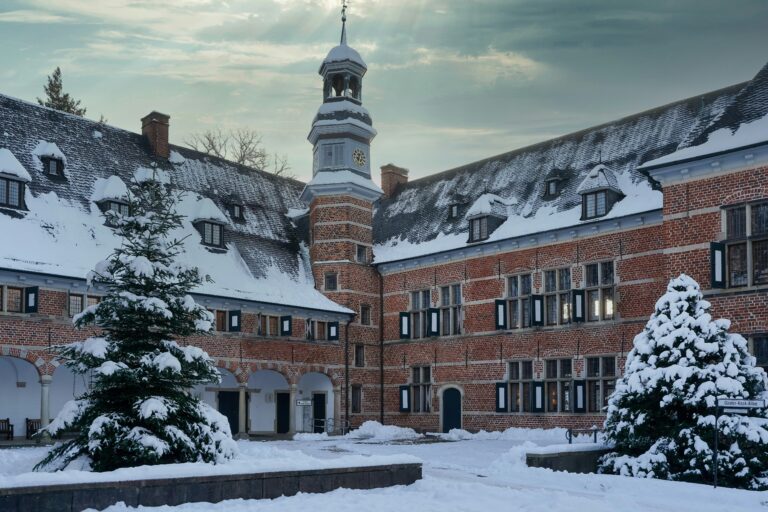
Why Germany Remains Europe's Most Compelling Corporate Event Destination in 2026
A Comprehensive Guide for International Event Planners
I still remember my first site inspection in Germany as a young event planner. I had been sent by a client who wanted somewhere efficient for their annual conference. Honestly? I expected grey skies, stiff formality, and predictable venues. What I discovered changed not just that event, but my entire career.
Standing in a former power station in Berlin, now transformed into one of the most extraordinary event spaces I had ever seen, I realised something: Germany was not just efficient—it was revolutionary. The country that gave us the printing press, the automobile, and the jet engine was quietly reinventing what corporate events could be.
That was fifteen years ago. Today, as co-founder of The DMC Collective, I have had the privilege of designing hundreds of corporate events across Germany. Every single time, I am reminded why this destination continues to surprise, inspire, and deliver results that our clients measure not just in ROI, but in transformed teams and unforgettable experiences.
The 60-Second Case for Germany
3 Things Only Germany Offers
- Historic + High-Tech Combo: 800-year castles with gigabit WiFi and VR capabilities
- Sustainability Without Sacrifice: Eco-credentials that actually save money (not cost more)
- Central Europe Access: 9 countries within 2-hour train ride from major cities
Deal-Breakers (Be Honest With Yourself)
- Need guaranteed sunshine Oct-March? → Go Mediterranean
- Budget under $400pp total for 3 days? → Go Eastern Europe
- Less than 6 months to plan? → Risky (permits, venue availability)
Still reading? Good. Let us get specific…
The Strategic Case: Why Choose Germany
Let me start with the numbers, because in our industry, data matters.
Germany commands 13.7% of the global MICE market—that is meetings, incentives, conferences, and exhibitions. By 2030, the Germany MICE DMC sector alone is projected to reach $228.5 billion USD. These are not just impressive statistics; they represent infrastructure, expertise, and an entire ecosystem built around making your event succeed.
Economic Momentum
The German government has committed €500 billion to infrastructure investment from 2025-2037, with €166 billion specifically earmarked for transport modernisation. For event planners, this translates to enhanced airport connections, expanded high-speed rail networks, and improved urban transport systems in all major cities.
GDP growth projections show Germany expanding from 1.4% in 2026 to 1.8% by 2027, reflecting recovered economic confidence and increased business activity—exactly the conditions that drive corporate event spending.
World-Class Connectivity
Frankfurt Airport connects to over 300 destinations globally, whilst Munich and Berlin serve as major European hubs. The ICE high-speed rail network means Berlin to Munich takes just 4 hours, Frankfurt to Cologne 1 hour, and virtually any major German city is accessible within a morning or afternoon.
Fibre-optic coverage is expanding to reach 50% of German businesses by 2025, ensuring hybrid events benefit from robust, reliable connectivity whether streaming from Berlin or broadcasting from a Bavarian castle.
Budget Planning: International Comparison
3-Day Corporate Conference Budget per Person (All amounts in USD)
Category | Budget | Mid-Tier | Premium | Notes |
|---|---|---|---|---|
Accommodation (2 nights) | $150-200 | $250-350 | $400-600 | Per night rate |
Venue & F&B | $200-300 | $400-600 | $800-1,200 | 3-day total |
Activities & Team Building | $100-150 | $200-350 | $500-800 | Optional extras |
TOTAL PER PERSON | $450-650 | $850-1,300 | $1,700-2,600 | Excludes flights |
Note: All figures in USD. Rates current as of January 2026. Actual costs vary by season, city, and group size. Contact The DMC Collective for precise budgeting tailored to your requirements.
Best Cities in Germany for MICE Events
Berlin: The Innovation Capital
Berlin combines historic gravitas with cutting-edge innovation. The city celebrates its 20th anniversary as a UNESCO City of Design in 2026, whilst new venues like the 45-storey Estrel Tower (opening late 2026) and Ocean Berlin marine experience centre redefine what is possible for corporate events.
Capacity: Messe Berlin (up to 26,000), ICC Berlin (reopening 2026, 5,000+), Estrel Tower (15,000+ sqm event space)
Perfect for: Tech launches, creative conferences, innovation summits, brand-building events
Munich: Bavarian Prestige
Munich offers the perfect blend of corporate sophistication and cultural richness. The International Congress Centre Munich (ICM) accommodates 6,000 attendees, whilst proximity to Lake Tegernsee (50km) enables seamless transitions from boardroom to Alpine retreat.
Capacity: ICM Munich (6,000), Messe München (trade show excellence), BMW Welt (flexible spaces)
Perfect for: Executive retreats, automotive/engineering events, luxury incentives, Oktoberfest tie-ins
Frankfurt: Design Capital & Business Hub
Frankfurt serves as World Design Capital 2026, hosting over 200 design-focused events throughout the year. With Europe’s best-connected airport and the continent’s financial centre, Frankfurt delivers both accessibility and prestige.
Capacity: Messe Frankfurt (world’s largest trade fair complex), Jahrhunderthalle (4,000), Congress Center Messe Frankfurt
Perfect for: Financial services events, international conferences, trade exhibitions, design-focused programmes
Hidden Gems Worth Considering
- Lake Tegernsee: Alpine luxury 50km from Munich. Perfect for executive retreats combining strategy with wellness.
- Baden-Baden: Reinvented wellness destination in the Black Forest. Luxury without crowds, authentic thermal experiences.
- Dresden: Baroque splendour meets modern congress facilities. Cultural heritage for incentive programmes.
- Baltic Coast: Unexpected beach incentives. Rügen Island and Sylt offer seaside experiences most assume impossible in Germany.
For Asia-Pacific Planners: Key Considerations
Flight Connections & Jet Lag Management
Singapore to Frankfurt: 12+ hours direct on Singapore Airlines or Lufthansa. Tokyo/Hong Kong/Seoul: 11-13 hours to major German cities. Major Asian hubs maintain excellent connectivity to Frankfurt, Munich, and Berlin.
Our Jet Lag Strategy: We design Day 1 specifically for recovery—late breakfast (10am), outdoor activities using natural light to reset circadian rhythm, lighter evening programme vs. heavy gala dinners, and no critical content before Day 2.
Cultural & Practical Support
- Halal Food: Major cities have certified halal caterers. Berlin, Frankfurt, Munich have significant Turkish/Middle Eastern populations providing extensive halal infrastructure.
- Prayer Rooms: Major airports and hotels provide multi-faith facilities. We arrange quiet spaces with directional indicators (Qibla) at conference venues.
- Tax-Free Shopping: EU VAT refund (19%) available at airports for non-EU residents. Major shopping streets offer streamlined tax-refund services.
- Visa Support: We provide documentation assistance for Schengen visa applications and coordinate with German consulates when needed.
Here’s What I’m Actually Asking For
One event. Just one.
Give me your Q3 conference. That product launch. The incentive trip for your sales team who crushed their targets. The trade show you’re worried might feel too corporate, too boring, too much like every other event you’ve ever done.
Let me show you what happens when you stop playing it safe.
Your morning keynote in a former palace. Your evening reception in a building that was on the other side of the Iron Curtain forty years ago. Your team dinner in a Michelin-starred restaurant that used to be a public toilet (I’m not joking, this is a real place and it’s amazing).
Museum venues where art and business aren’t enemies – they’re collaborators. Warehouses turned into wonderlands. Conference rooms that used to be train stations. Trade show spaces that have been perfecting their craft since before your company existed.
And yes, currywurst at 3 AM. Obviously. It’s when the best networking happens.
For North American Planners: Why Choose Germany
What Germany Offers That US Venues Cannot
- Authentic Historic Venues: 800-year castles where royalty actually lived, not 1920s recreations
- Functional High-Speed Rail: Berlin to Munich in 4 hours city centre to centre, no airport security, working WiFi throughout
- Innovation Tourism: Visit BMW factories, Industry 4.0 demonstrations, engineering headquarters—not concept videos but actual facilities
- Central European Access: 9 countries within 2-hour train including Prague, Zurich, Amsterdam
Practical Matters for US Planners
- Medical Care: Germany has excellent healthcare (often ranked above US). We provide lists of English-speaking doctors and 24/7 emergency contacts.
- Cell Phones: EU SIM cards available at airports (€15-30/week) vs. expensive US carrier roaming. Most venues have excellent WiFi.
- Electrical: Germany uses 230V. Modern electronics handle both. We can provide adapter kits or include in welcome bags.
Navigating Germany Event Regulations & Permits
One of the most frequent concerns international planners raise is navigating German regulations. The good news: the framework is comprehensive and, once understood, remarkably straightforward.
When You Need Permits
Standard hotel and conference venue events typically do not require special permits beyond what venues handle internally. However, permits are necessary for:
- Outdoor events in public spaces
- Events serving alcohol outside licensed premises
- Live music and entertainment (sound permits)
- Events with pyrotechnics or special effects
Timeline & Process
Submit permit applications 8-12 weeks before your event. Processing times vary by municipality and event complexity. Applications must be submitted in German, which is where working with a local DMC proves invaluable.
Germany operates under a federal system, meaning some regulations vary by state (Länder). A professional destination management company Germany navigates these nuances, ensuring compliance whilst minimising bureaucratic delays.
How The DMC Collective Simplifies This
We handle all permit applications, coordinate with local authorities, ensure compliance with noise ordinances and safety regulations, and provide German-language documentation. Our relationships with municipal authorities across Germany mean applications progress smoothly, and we catch potential issues before they become problems.
Sustainability: Why It Actually Matters to Your Job
Reality check: Your executive team wants sustainability credentials for the annual report. But they do not want to pay extra or compromise attendee experience.
Germany’s Advantage: Sustainability as Baseline
Germany leads Europe in event sustainability. National commitments include a €500B infrastructure fund with €100B allocated to climate initiatives, Net Zero 2050 targets for major venues following GHG Protocol standards, and the fairpflichtet sustainability code governing German events.
What This Means Practically
- For Your Budget: Local sourcing often costs less (shorter transport), rail vs. air saves €50-150 per person, reusable materials cost-neutral vs. single-use
- For Your Reporting: We provide post-event carbon footprint calculations, waste diversion percentages, local sourcing statistics—all formatted for CSR reports
- For Your Attendees: They never feel deprived—local seasonal food tastes better, rail travel provides working time, digital materials offer easier access
Frequently Asked Questions
What makes Germany ideal for corporate events?
Germany offers a unique combination of world-class infrastructure, central European location, and innovation heritage. With 13.7% of the global MICE market, Germany provides proven event expertise, cutting-edge venues (including new openings in 2026 like Estrel Tower), and sustainability credentials that align with corporate ESG goals. The country’s high-speed rail network, major international airports, and expanding fibre-optic infrastructure make logistics seamless for both European and international attendees.
How far in advance should I plan a corporate event in Germany?
For major conferences (500+ attendees): 12-18 months. For mid-size events (100-500): 9-12 months. For smaller programmes (under 100): 6-9 months minimum. Germany event regulations and permits require 8-12 weeks processing time, so earlier planning prevents constraints. Prime venues in Berlin, Munich, and Frankfurt book quickly, especially during trade show season. Working with a Germany DMC partner from the start ensures optimal venue selection and permit compliance.
What are the best cities in Germany for MICE events?
Top tier: Berlin (creativity, innovation, new venues), Munich (prestige, technology, Alpine access), Frankfurt (World Design Capital 2026, finance hub, airport connectivity). Second tier: Hamburg (maritime, sustainability), Cologne/Düsseldorf (Rhine corridor, trade shows), Stuttgart (automotive, engineering). Hidden gems: Lake Tegernsee (executive retreats), Baden-Baden (wellness luxury), Freiburg (sustainability focus), Dresden (cultural heritage), Baltic Coast (beach incentives). Each city offers distinct advantages depending on your event objectives, industry focus, and attendee preferences.
Do I need permits for corporate events in Germany?
Permit requirements depend on event type and size. Standard hotel/conference venue events typically do not require special permits beyond what venues handle. However, you will need permits for: outdoor events in public spaces, events serving alcohol outside licensed premises, live music/entertainment, and events with pyrotechnics or special effects. Timeline: submit applications 8-12 weeks before your event. A professional destination management company Germany navigates this process, handling applications in German when necessary and ensuring compliance with federal and state (Länder) regulations.
What does a DMC do for corporate events in Germany?
A Germany DMC (Destination Management Company) provides comprehensive local expertise beyond basic event planning. Services include: venue sourcing and negotiation (accessing venues not publicly listed), permit acquisition and regulatory navigation, budget optimization through local relationships, programme design incorporating authentic German experiences, logistics coordination (accommodation, transport, F&B), on-site management with German-speaking staff, and post-event impact reporting. The key difference: DMCs offer strategic partnership with genuine local knowledge, cultural bridge services, and problem-solving capabilities that international planners cannot access independently.
How does Germany compare budget-wise to other European destinations?
Germany typically costs 15-25% less than London, Paris, or Zurich for equivalent quality. Compared to US cities (New York, San Francisco), Germany offers 5-star European experiences at 4-star US prices. Budget range for 3-day conference (per person, excluding flights): Budget tier $450-650, Mid-tier $850-1,300, Premium $1,700-2,600. Germany provides better value than Western European capitals whilst delivering superior infrastructure and service standards compared to cheaper Eastern European alternatives. Transparent pricing culture means fewer hidden costs and surprise fees.
For Asia-Pacific planners: What about flight connections and jet lag?
Singapore to Frankfurt: 12+ hours direct on Singapore Airlines or Lufthansa. Tokyo/Hong Kong/Seoul: 11-13 hours to major German cities. Major Asian hubs have excellent connectivity to Frankfurt, Munich, and Berlin. For jet lag mitigation: We design Day 1 programming specifically for recovery—late breakfast (10am), outdoor activities using natural light to reset circadian rhythm, lighter evening programme vs. heavy gala dinners on arrival night, and no critical content before Day 2. Most Asia-based clients report the flight investment worthwhile for European prestige, innovation credibility, and four-season experiences impossible in tropical destinations.
For US planners: Why choose Germany over major American cities?
Germany offers what US venues cannot replicate: (1) Authentic historic venues—800-year castles where royalty lived, not 1920s recreations; (2) Functional high-speed rail—Berlin to Munich in 4 hours city centre to centre, no airport security; (3) Innovation tourism—visit BMW factories, Industry 4.0 demonstrations, engineering headquarters; (4) European prestige for global brand positioning; (5) Central access to 9 countries within 2-hour train. Budget reality: Mid-range Munich hotel $180-250/night vs. $300-400 in SF/NYC. Conference venue $75-150pp/day vs. $150-250 US. The investment delivers experiences American venues fundamentally cannot provide.
What sustainability credentials does Germany offer for ESG reporting?
Germany leads Europe in event sustainability. National commitments: €500B infrastructure fund including €100B Climate Fund, Net Zero 2050 targets for major venues following GHG Protocol. Venue standards: Messe München, Berlin, Frankfurt all have published reduction pathways. Industry code: fairpflichtet sustainability standards govern German events. Practical benefits: renewable energy as standard, extensive rail network enabling low-carbon transport, local seasonal food sourcing, waste separation/recycling infrastructure. Post-event: verified carbon footprint calculations, waste diversion percentages, local sourcing statistics—all formatted for corporate CSR reporting. Sustainability is baseline practice, not premium cost.
What is new for corporate events in Germany in 2026?
Major 2026 developments: (1) Estrel Tower opening late 2026—Germany’s tallest hotel tower at 45 storeys with integrated event spaces; (2) Ocean Berlin—marine experience centre with 7.5 million litre shark tank for unique events; (3) Bauhaus Archive reopening with 2,000 sqm modernist design showcase; (4) Frankfurt as World Design Capital hosting 200+ design events; (5) Berlin’s 20th UNESCO City of Design anniversary; (6) Wagner Festival Bayreuth 150th anniversary (July-August); (7) Fibre-optic expansion reaching 50% business coverage enabling superior hybrid events; (8) €166B transport investment delivering enhanced rail connectivity. Industry optimism: 85% of event professionals rate 2026 outlook positively—highest in 5 years.
Your Germany Story Begins Here
Germany in 2026 offers something genuinely special: a destination honouring its extraordinary history whilst pioneering its future, combining infrastructure investment with cultural depth, and balancing efficiency with creativity in ways no other location manages.
The DMC Collective was founded in Berlin by a team of female event professionals who live and breathe the cities across Germany. From our home base in Berlin, our event planners have designed hundreds of corporate programmes across every major German city—from Stuttgart to Hamburg, Dresden to Lake Tegernsee. We have built relationships with venues, vendors, and local authorities that take years to develop. We have solved problems you have not encountered yet and created experiences clients remember years later.
READY TO EXPLORE WHAT IS POSSIBLE?
Schedule Your Free Consultation
The DMC Collective
Female-Founded | Berlin-Based | Germany Experts
Germany 2026: Where your vision meets our expertise, and events become stories worth telling.

Related Articles

Nirup Island: Indonesia’s Exclusive Destination for Luxury Corporate Events
Nirup Island, nestled within Indonesia’s serene Riau Archipelago, stands out as a sophisticated choice for intimate luxury events, including board meetings, incentives, and exclusive partner seminars tailored for multinational audiences.
Why is Bali a Leading Destination for Corporate Event Spaces, and What Has Made Its Resorts Renowned Worldwide?
Discover why Bali is a top choice for corporate events, with world-class resorts and stunning venues that attract businesses from around the globe.
Corporate Incentive Travel Services in Bali: Why Bali Remains a Top Choice for Incentive Travel Planners
This article explores why Bali remains a top choice for incentive travel planners and highlights some of Indonesia’s hidden gems that deserve a spot on the radar of forward-thinking planners.