
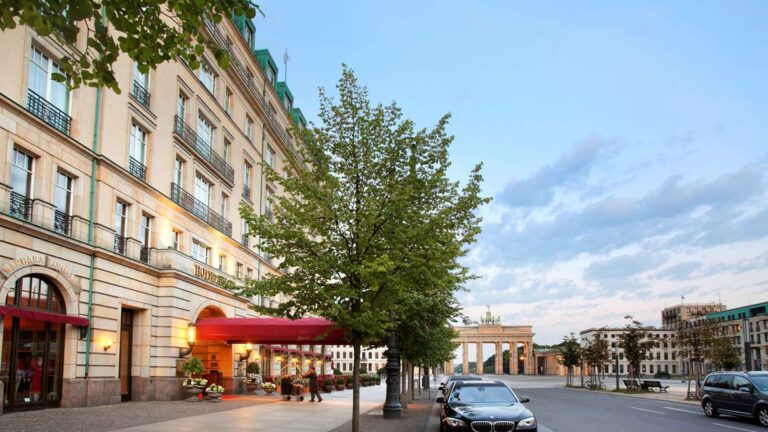
Berlin Corporate Event Venues 2026: Sustainable MICE Spaces Where Innovation Meets Heritage
Thought leadership from The DMC Collective’s Berlin event planning team
It’s late afternoon in Berlin. Light slants through industrial windows, catching dust motes above reclaimed brick. Somewhere, a production team rehearses tomorrow’s keynote in a venue that was once Europe’s largest cold store. Down by the Spree, solar panels charge the batteries powering tonight’s gala. On Gendarmenmarkt, a 300-year-old cathedral prepares to host a product launch streaming to five continents.
This is Berlin in 2026 — where the past doesn’t just inform the present, it actively shapes the future of corporate events and business tourism.
For event planners arriving from Singapore, Shanghai, New York, or London, Berlin presents something increasingly rare: a major European MICE destination where sustainability isn’t marketing speak, it’s infrastructure. Where hybrid event capability isn’t a premium add-on, it’s baseline. Where conference budgets of €200 and €2,000 both yield experiences worth remembering.
But here’s what makes Berlin’s event industry truly different right now: the city has stopped trying to compete with Paris’s elegance or London’s polish. Instead, it’s leaned into what it does best — pragmatic innovation, historical honesty, and a refusal to waste good space on ceremony alone.
We’ve spent fifteen years designing corporate events, incentive programmes, and international conferences across this city. We’ve watched neighbourhoods transform, seen venues evolve, and learned which spaces deliver beyond their specification sheets. What follows isn’t a directory — it’s a perspective on where Berlin’s MICE sector is heading and which venues are leading the way.
The Industry Shift: From Location to Legacy
Here’s what changed between 2024 and 2026 in the global MICE market.
Five years ago, corporate venue selection followed a predictable hierarchy: location first, capacity second, aesthetics third. Sustainability was item seven on a twelve-point checklist, wedged between “accessible toilets” and “proximity to hotels.”
That’s finished.
Today’s procurement teams — particularly those answering to boards in California, Scandinavia, or Singapore — arrive with carbon budgets alongside financial allocations. They need venues demonstrating proven environmental credentials, not just promises. EMAS certification. Renewable energy generation on-site. Transparent waste streams. Locally sourced catering as standard, not optional.
According to 2025 MICE industry research, 54% of event organisers now prefer green-certified venues, and 47% of participants consider environmental impact when registering for corporate events. This isn’t virtue signalling — it’s procurement policy.
Berlin saw this coming. The city ranks fourth globally in the Global Destination Sustainability Index and seventh in Europe for MICE destinations (cvent Report 2025). Germany leads European MICE infrastructure with particularly strong demand in Berlin, Frankfurt, and Munich. But rankings don’t convey what it feels like to work here — how a venue manager will spend twenty minutes explaining their rainwater harvesting system, or how the city’s Sustainable Meetings Berlin programme has created an actual ecosystem of certified partners speaking the same language.
The venues featured here represent where this convergence is heading: spaces solving for sustainability and technology and budget efficiency and experiential impact. Not one or two. All four.
Because in 2026, the brief isn’t “find me a sustainable venue.” It’s “find me a venue where sustainability enables better events.”
Kühlhaus Berlin: Gothic Industrial Architecture Meets Contemporary Corporate Events
Kreuzberg | 6,000 m² across seven storeys | Capacity: Flexible configurations
Around 1900, this was Europe’s largest cold storage facility — a paradise for perishables, a cathedral of commerce. Today, it’s something else: a protected industrial monument where exposed brick, concrete beams, and steel viaducts create an urban theatre unlike anywhere else in Berlin.
Kühlhaus sits at the junction of three neighbourhoods — Schöneberg, Kreuzberg, and Mitte — which tells you something about Berlin’s permeable geography. Borders here are porous. History layers rather than erases.
What Makes It Work for 2026 Corporate Events:
The building’s industrial bones provide exactly what modern event design needs: flexibility without blankness, character without kitsch. Fashion shows love the raw authenticity. Corporate product launches use it to signal they’re not afraid of edges. The courtyard, partially spanned by the elevated U1 tracks, offers an outdoor dimension that’s distinctly Berlin — urban, slightly gritty, completely unpretentious.
Six usable areas across multiple floors mean you can design a journey, not just book a room. Ground floor reception, rooftop breakout, basement after-party. The venue doesn’t fight your creative brief; it absorbs it.
For international event planners considering Kühlhaus:
This isn’t the space for conservative banking conferences or anything requiring traditional elegance. But if your brand vocabulary includes “disruptive,” “authentic,” or “unconventional,” this is where those adjectives become three-dimensional.
Proximity to Gleisdreieck park means delegates can step outside between sessions. The neighbourhood has evolved rapidly — new residential quarters, the park itself now a beloved green lung. What was once desolate railway junction is now one of Berlin’s most compelling urban regeneration stories.
Sustainability credentials: While Kühlhaus hasn’t pursued EMAS certification, its adaptive reuse of a protected industrial monument represents a different kind of environmental consciousness — preservation over demolition, renovation over new-build. This matters for corporate ESG reporting.
Practical access: U1/U2 Gleisdreieck station (5-minute walk). Multiple hotel options within 1km. Load-in logistics designed for complex productions.
Französischer Dom: Historic Elegance with Certified Sustainability
Gendarmenmarkt, Mitte | 1,000 m² event space | Capacity: Up to 500 in main hall
Some venues earn gravitas through architecture. Others through history. The Französischer Dom has both — and it’s managed by BESONDERE ORTE, Berlin’s sustainability pioneers with over 20 years leading the city’s green event movement.
Built in stages beginning in 1701 for Berlin’s French Protestant refugee community (the Huguenots), the complex today comprises the Französische Friedrichstadtkirche and its iconic domed tower. Together, they offer event space that’s rare in any global MICE destination: historically significant, acoustically exceptional, and located on what many consider Berlin’s most beautiful square.
What Makes It Work for 2026 MICE Events:
Three elements set Französischer Dom apart in Berlin’s competitive conference venue market.
First, the location itself — Gendarmenmarkt, flanked by the Konzerthaus and Deutscher Dom, within walking distance of Friedrichstraße shopping and Museum Island. For international delegates, this is Berlin’s cultural and commercial heart.
Second, the acoustic environment. The sacred architecture creates natural sound ideal for classical performances, award ceremonies, or any event where spoken word matters. The venue hosts a restored 1963 Steinway grand piano, carefully brought to concert standard by Klangmanufaktur Hamburg using sustainable restoration practices — from lead-free brass key weights to ecological hard oil instead of plastic-based varnish.
Third — and this is where BESONDERE ORTE’s management shows — the sustainability infrastructure. 100% renewable energy. Hugo & Notte restaurant providing organic, regional catering. A 360-degree viewing platform at 40 metres that transforms coffee breaks into memorable moments without requiring powered entertainment. EMAS certified. Sustainable Meetings Berlin certified partner.
For Corporate Event Planners Considering Französischer Dom:
This is the rare Berlin venue satisfying both conservative expectations (elegance, prestige, central location) and progressive ESG requirements (certified sustainability, hybrid capability, authentic local character).
The main hall accommodates up to 500 for galas or concerts. Smaller rooms support seminars and workshops. The venue ticket programme allows guests to use public transport with 100% green electricity — detail that matters when carbon reporting reaches board level.
Hybrid event capability: Full technical infrastructure for streaming, remote participation, and broadcast production. The team has managed hybrid formats for over two decades.
Conference and meeting configurations:
- Main hall: 500 theatre, 300 banquet
- Ballroom: 50 reception, 70 cinema-style
- Multiple breakout rooms available
- On-site restaurant for catering and breaks
Practical access: U2 Hausvogteiplatz (3-minute walk), U5/U6 Friedrichstraße (6-minute walk). Parking garages nearby. 15 minutes to Berlin Hauptbahnhof.
For brands targeting premium segments without ostentation, this venue speaks the right language fluently.
Tagungswerk: Pragmatic Sustainability for Corporate Conferences
Between Checkpoint Charlie and Jewish Museum | 1,000 m² | Capacity: Up to 260
The Tagungswerk doesn’t announce itself. Former Jerusalemkirche, a 1960s church with clean lines and straight edges, it presents as what it is: a practical meeting space for serious work.
This is Berlin’s “get things done” conference venue. Run by BESONDERE ORTE, it embodies the city’s pragmatic approach to environmental responsibility — less about signalling, more about systems that actually function.
What Makes It Work for 2026 Business Events:
Start with the roof terrace. 360-degree views over Berlin Mitte, photovoltaic panels generating green electricity on-site, space for 100 people. It’s the venue’s signature move — literal high ground where sustainability becomes visible infrastructure, not abstract commitment.
Inside, the layout favours productivity: a divisible main hall with state-of-the-art LED wall, five seminar rooms, generous catering areas with floor-to-ceiling windows overlooking the Lindenhof courtyard. Mahogany parquet and brick walls provide warmth without fuss.
Environmental certifications:
- EMAS certified (European Eco-Management and Audit Scheme)
- Sustainable Meetings Berlin certified partner
- Germany’s “Travel for All” accessibility programme
- Photovoltaic system generating on-site renewable energy
- Combined heat and power unit (CHP)
- Green roof system
- Rainwater management
Organic snacks and beverages as standard. The venue generates its own power and makes no apologies for leading with function over form.
For Corporate Planners Considering Tagungswerk:
If your conference centres on content rather than spectacle, this is your space. The location between two of Berlin’s most significant historical sites (Checkpoint Charlie and the Jewish Museum) provides context without competing for attention.
Budget-conscious planners appreciate that sustainability here doesn’t inflate costs — it’s baked into the operating model. The BESONDERE ORTE network means you’re booking into an ecosystem: catering, technology, carbon offsetting through atmosfair, even railway event tickets all handled through one relationship.
Meeting room configurations:
- Main hall: 260 theatre, 120 banquet (divisible)
- 5 seminar rooms: 12-40 people each
- Roof terrace: 100 standing reception
- Indoor courtyard: Additional breakout space
Hybrid and virtual event infrastructure: Tagungswerk was streaming events before it became mandatory. Whether you need full broadcast production or simple remote participation, they’ve solved these technical challenges already. With 68% of MICE organisers investing in hybrid capabilities by 2026, this proven infrastructure matters.
Practical access: 15 minutes to Berlin Hauptbahnhof, 3km to government district. U6 Kochstraße station nearby. Multiple hotel options within walking distance.
For multi-day conferences, international attendees appreciate being in Mitte, where Berlin feels most completely itself.
Motorwerk Berlin: Industrial-Scale Events with Carbon-Neutral Operations
North Berlin, Weissensee | 3,500 m² indoor + 5,000 m² outdoor | Capacity: Up to 3,000
View detailed Motorwerk venue profile →
Here’s what happens when you venture north: you discover Berlin’s quieter self.
Motorwerk occupies a former electromotor factory in Weissensee, an area most international visitors never see. This isn’t the Instagram Berlin of Mitte or Kreuzberg. It’s residential, un-trendy, authentically local — precisely what makes it compelling for certain corporate events and incentive programmes.
What Makes It Work for Large-Scale 2026 Events:
The scale, first. Indoor spaces ranging from 200 to 2,000 m², outdoor areas adding another 5,000 m². This is where large-format events find room to breathe — exhibitions, fashion shows, e-sports tournaments, automotive launches, major conferences.
Second, the CO₂-neutral operation with 100% sustainable energy. For brands in sectors facing intense sustainability scrutiny (automotive, fashion, technology), Motorwerk’s environmental credentials aren’t nice-to-have — they’re permission to proceed. With 80% of event organisers committing to sustainability practices in 2026, this matters operationally.
Third, the location strategy. Weissensee offers something rare in major European cities: proximity to nature without sacrificing accessibility. The neighbourhood has two lakes within walking distance — Weissensee itself and Orankesee. Delegates can swim in summer, walk forested paths, experience Berlin beyond the tourist corridors.
For International Event Teams Considering Motorwerk:
This venue suits brands comfortable operating slightly outside conventions. It’s not central. It’s not glamorous. But for incentive programmes, team offsites, or product launches targeting Berlin’s creative communities, the Weissensee location becomes an asset rather than compromise.
The Living Hotel Weissensee provides accommodation on-site. Tram connections to Prenzlauer Berg take 15 minutes. The neighbourhood’s transformation — young families discovering it, restaurants opening, creative studios relocating — mirrors Berlin’s broader evolution beyond the tourist centre.
Event configurations:
- Indoor: 200-2,000 m² modular spaces
- Outdoor: 5,000 m² for exhibitions, outdoor events
- Total capacity: Up to 3,000 attendees
- Multiple breakout areas, green rooms, production facilities
Sustainability credentials:
- 100% sustainable energy
- CO₂-neutral operations
- Environmental reporting available for corporate ESG compliance
Past client sectors: Fashion houses, automotive brands, digital platforms, e-sports organisations — sectors where production values and environmental accountability both matter.
Practical access: Tram M4 direct connection. Parking for production vehicles. Accessible from BER airport in 45 minutes.
Silent Green Kulturquartier: Where Memory Becomes Meaning
Wedding | 1,600 m² | Capacity: Varies by space configuration
View detailed Silent Green venue profile →
Berlin’s first crematorium, built in 1910, protected as historical monument, reimagined in 2015 as cultural quarter. If you want to understand how Berlin transforms difficult history into possibility, start here.
Silent Green sits in Wedding, a neighbourhood long dismissed as rough, now recognised as Berlin’s next creative frontier. High-end restaurants like Ernst and Julius have noticed. So have discerning event planners seeking venues with genuine narrative depth.
What Makes It Work for 2026 Cultural and Corporate Events:
The Cupola — 17 metres high, the soul of the building — creates a spatial experience that’s simultaneously intimate and monumental. It’s where architecture becomes argument: this much height, this much light, in service of gatherings rather than grief.
The Cube offers three modular spaces (20-100 m²) ideal for seminars, workshops, focused sessions. Perfect for breakout discussions during larger conferences or intimate stakeholder meetings.
The Concert Hall — 1,600 m² of industrial character, windowless, acoustically distinct — handles larger productions, product launches, or immersive brand experiences.
But the real story is conceptual. Silent Green represents Berlin’s willingness to reckon with difficult history. Free-thinking early 20th-century Berliners chose cremation over traditional burial — a radical act. The building embodies that spirit: pragmatic, unfussy, unafraid.
For Corporate Event Teams Considering Silent Green:
This venue attracts brands with something to say. Cultural organisations, technology companies with social missions, NGOs, educational institutions, innovation-focused corporates. The space doesn’t work for everyone — and that’s intentional.
Mars restaurant, located within the complex, provides catering matching the venue’s values. Basalt bar offers post-session cocktails in surroundings that feel discovered rather than designed.
Wedding’s evolution — lush parks, immigrant food culture, emerging restaurant scene — means the neighbourhood itself becomes part of the event experience. The AC Marriott Hotel on Humboldthain Park provides standard accommodation. For those wanting more character, Prenzlauer Berg’s boutique options are fifteen minutes away.
Meeting and event configurations:
- Cupola: 17m-high ceremonial space, flexible capacity
- Concert Hall: 1,600 m², up to 1,000 standing
- Cube spaces: 20-100 m² for workshops and breakouts
- Outdoor courtyard areas
Integration with experiential programming: Silent Green’s cultural calendar (exhibitions, readings, performances) offers ready-made evening programming. The venue doesn’t just rent space; it contextualises your event within Berlin’s contemporary cultural dialogue.
(For more on designing after-show experiences that build connection rather than just fill time, see our earlier reflection on experiential design in 2026.)
Practical access: U8 Pankstraße station (8-minute walk). Tram connections. 20 minutes to Berlin Mitte. Growing neighbourhood dining and hotel infrastructure.
The Convergence: Why These Five Venues Define Berlin's MICE Landscape Now
Let’s address the strategic question: why these five specific venues?
Because they represent where corporate event design and MICE planning are heading, not where they’ve been. Each solves a different equation in the 2026 landscape:
Kühlhaus Berlin demonstrates what happens when industrial heritage meets contemporary creative ambition — raw space that amplifies rather than dictates. It’s the answer for brands needing architectural theatre without pretence.
Französischer Dom proves sustainability and prestige aren’t contradictory. It’s the solution when corporate affairs asks, “Can we actually do this sustainably without looking like we’re trying too hard?” EMAS-certified elegance on Berlin’s most prestigious square.
Tagungswerk embodies pragmatic environmentalism. No grand gestures, just systems that work. Perfect for organisations where sustainability is budgeted line-item, not marketing campaign. Conference functionality with proven green credentials.
Motorwerk solves for scale and environmental accountability simultaneously — the space for fashion, automotive, or technology brands needing room to build big while answering to strict carbon targets. CO₂-neutral operations at industrial capacity.
Silent Green attracts planners understanding that venue choice is statement. It’s where you go when the event’s purpose matters as much as its production. Cultural resonance with authentic Berlin narrative.
Together, they map Berlin’s geographical and philosophical range. From Mitte’s cultural heart to Weissensee’s residential calm. From certified sustainability leaders to adaptive reuse pioneers. From intimate workshops to large-scale exhibitions.
What's Changing in 2026: Professional Implications for MICE Planners
Here’s what we’re observing from our position inside Berlin’s event ecosystem:
- Sustainability Becomes Selection Criteria, Not Feature Add-On
The shift isn’t subtle. Procurement teams now begin RFPs with carbon budgets alongside financial allocations. Venues without demonstrable environmental credentials aren’t making shortlists — not because planners are virtuous, but because their CFOs won’t sign off.
Industry data supports this: 54% of MICE organisers prefer green-certified venues in 2026, and 47% of participants consider environmental impact when registering. This isn’t trend — it’s procurement policy.
EMAS certification, Sustainable Meetings Berlin partnership, on-site renewable generation, transparent supply chains — these have moved from differentiators to requirements. Venues investing now will compete. Those postponing won’t.
- Hybrid Event Infrastructure as Baseline Expectation
Every venue featured here offers robust hybrid capability. Not because we selected for it, but because Berlin venues without it have stopped winning international business.
The pandemic permanently altered expectations. Whether or not we face future health disruptions, the ability to include remote participants, stream keynotes, enable global access — this is now standard. Research shows 68% of MICE organisers plan to invest in AR/VR tools and hybrid solutions by 2026.
The question isn’t “Can you do hybrid?” but “How sophisticated is your broadcast production capability?”
- Budget Efficiency Through Systems, Not Sacrifice
Berlin’s cost advantage over London, Paris, or Amsterdam remains significant — 20-30% lower venue and service costs in most categories. But the smarter story is how sustainability initiatives often reduce rather than inflate expenses.
Solar generation lowers operating costs. Local sourcing reduces transport. Efficient systems (LED technology, water management, waste streams) translate to better pricing. The venues leading on environmental performance are often the same ones offering better value.
With 60% of companies being more selective about business travel spending post-pandemic, this cost-efficiency without quality compromise matters strategically.
- Location Strategy Beyond Central Mitte
Weissensee and Wedding represent something larger: Berlin’s continued decentralisation. As Mitte saturates and prices rise, strategic planners are discovering neighbourhoods where character and value intersect.
This isn’t about compromise. It’s about understanding that Berlin’s appeal has never been polish — it’s authenticity, edge, the sensation of discovering something still in process. Outlying neighbourhoods deliver that in ways central districts no longer can.
The Practical Framework: Selecting Corporate Venues in Berlin
Different events need different venues. Rather than prescriptive recommendations, here’s how we think through venue selection for international clients planning Berlin events:
Start with Purpose, Not Aesthetics
What’s the event trying to accomplish? Introduce a product? Build team cohesion? Demonstrate thought leadership? The answer shapes everything else. Silent Green suits purpose-driven brands. Motorwerk suits scale-requiring launches. Tagungswerk suits content-focused conferences.
Evaluate Sustainability Against Actual Requirements
If your organisation reports carbon emissions publicly, you need venues providing detailed environmental data. EMAS certification, Sustainable Meetings Berlin partnership, documented renewable energy use — these aren’t optional.
If sustainability is important but not mandated, adaptive reuse venues (like Kühlhaus or Silent Green) offer credible environmental stories without full certification bureaucracy.
Map Hybrid Needs Before Booking
How many remote participants? What quality threshold? Is this simple streaming or full broadcast production? Venues offering “hybrid capability” span from basic livestream to multi-camera broadcast. Be specific about actual technical requirements.
Consider Neighbourhood as Event Extension
Where delegates spend time between sessions matters as much as the venue itself. Restaurants, parks, hotels, cultural attractions — these comprise the total experience.
- Weissensee offers lakes and quiet
- Gendarmenmarkt offers theatre and shopping
- Wedding offers emerging restaurant culture
- Kreuzberg offers urban edge and nightlife
Choose based on what enhances your programme’s objectives.
Factor Accessibility for Guests and Logistics
How does equipment get loaded in? Where do speakers prepare? Can suppliers access the site easily? Berlin’s public transport excellence means venues slightly off-centre often work better than central locations with complicated load-in logistics.
Budget for Whole Experience, Not Just Venue Rental
Berlin’s pricing transparency is remarkable compared to many cities, but total cost includes catering, technology, accommodation, transport. Work with local partners who understand how to budget comprehensively for corporate events in Berlin.
Looking Ahead: Trends Shaping Berlin's MICE Sector
From our perspective inside Berlin’s event community, several developments merit attention:
Berlin’s Technology Hub Positioning
Following GITEX Europe’s successful debut in May 2025 at Messe Berlin, the city has solidified its position as Europe’s technology and innovation hub. This matters for venue strategy — tech-forward spaces are seeing increased demand, and venues investing in advanced infrastructure are capturing that growth.
The event’s establishment signals Berlin’s evolution from “cool cultural capital” to “serious technology infrastructure.” Venues need to match this shift, and the five featured here already do.
Sustainable Meetings Berlin Programme Expansion
The certification programme continues adding partners and sophistication. Throughout 2026, expect carbon accounting, circular economy practices, and social impact measurement to become standard components. Venues building these capacities now will lead the market.
With 80% of event organisers committing to sustainability practices, Berlin’s structured approach through Sustainable Meetings Berlin provides competitive advantage.
Post-Pandemic Space Utilisation Evolution
The brief isn’t “bigger room, more seats” anymore. It’s “flexible configurations, multiple zones, seamless indoor-outdoor flow.” Venues designed for one-format-fits-all are struggling. Those offering modular possibilities are thriving.
Industry research shows 70-80% of planners see hybrid formats as key to future success, which means spatial design must accommodate both physical and virtual participation simultaneously.
Berlin’s Continued Positioning as Startup Capital
This creates demand for mid-scale, tech-enabled, budget-conscious venues. The sweet spot: 100-300 capacity, strong WiFi and AV, sustainable operations, accessible pricing. Any venue hitting all four criteria will maintain strong bookings throughout 2026 and beyond.
A Final Perspective: Why Berlin Doesn't Compete, It Complements
Paris offers elegance. London offers tradition. Amsterdam offers charm. Singapore offers precision.
Berlin offers something else: permission to experiment.
The city’s refusal to over-curate itself — the graffiti next to the gallery, the döner shop beside the Michelin star, the Soviet monument sharing the square with the Apple Store — this isn’t disorder. It’s philosophical position.
For event planners, this translates practically: Berlin venues don’t ask you to perform within narrow aesthetic constraints. They accommodate your brief, absorb your brand language, enable your creative vision. The city’s industrial heritage, its historical reckoning, its contemporary energy — all these create permission structures rather than limiting frameworks.
The five venues we’ve featured embody this. None tries to be something other than what it is. Kühlhaus owns its industrial bones. Französischer Dom respects its sacred history while serving secular purposes. Tagungswerk prioritises function without apologising. Motorwerk accepts its peripheral location as asset, not liability. Silent Green transforms difficult memory into meaningful space.
This is Berlin’s actual competitive advantage in the global MICE market: not trying to compete with anyone else’s definition of excellence, but defining its own.
What This Means for Your 2026-2027 Planning
Berlin in 2026 isn’t radically different from Berlin in 2024. The venues existed. The infrastructure was there. The sustainability commitments were documented.
What changed is emphasis. What was optional became expected. What was niche became mainstream. What was experimental became proven.
The venues we’ve featured aren’t new. They’re now necessary. They represent where the MICE industry moved while some were still debating — toward spaces that don’t ask you to choose between environmental responsibility and professional credibility, between budget efficiency and experiential impact, between hybrid capability and in-person connection.
They’re the venues where “and” replaced “or.”
For event planners navigating 2026’s evolving requirements — carbon reporting, hybrid participation, accessibility mandates, budget scrutiny, creative ambition — Berlin offers something increasingly rare: infrastructure that helps rather than hinders.
That’s not marketing. That’s just geography.
And it’s why we’re here.
How We Help
Our Berlin team lives in this ecosystem. We walk these venues, work with these managers, understand how spaces perform under pressure. We know which ones deliver beyond their spec sheets and which ones photograph better than they function.
When you’re planning for Berlin — whether from Singapore, Shanghai, New York, or Frankfurt — the challenge isn’t finding information. It’s knowing which information to trust. Venue websites show perfect lighting and empty rooms. Reality includes logistics, weather contingencies, supplier reliability, hidden costs.
That’s where local knowledge shifts from helpful to essential.
We don’t represent venues. We represent your interests inside Berlin’s event landscape. The difference matters when conflicts arise, when last-minute changes happen, when the untested vendor disappoints.
If you’re considering Berlin for 2026 or 2027, we’re happy to brief you with no obligation, no cost. Sometimes it’s a ten-minute conversation: “Here’s what works for that brief.” Sometimes it’s a site visit programme: “Let’s walk three venues and you’ll know which feels right.”
Either way, the perspective you get is informed by actual delivery, not marketing materials.
Contact: info@thedmccollective.com
Key Takeaways for 2026 Berlin Event Planning
- Sustainability is procurement policy: 54% of organisers prefer green-certified venues; EMAS and Sustainable Meetings Berlin certification matter
- Hybrid infrastructure is baseline: 68% of MICE organisers investing in hybrid/AR/VR capabilities by 2026
- Berlin offers 20-30% cost advantage over London, Paris, Amsterdam while maintaining quality
- Germany leads European MICE market with Berlin, Frankfurt, Munich as primary hubs
- Location strategy evolved: Outlying neighbourhoods (Wedding, Weissensee) offer authenticity and value
- Purpose-driven events outperform: Venues enabling meaningful experiences, not just transactions, win business
The DMC Collective maintains operational presence in Berlin with local event designers, production partners, and venue relationships across the city. For destination briefings, site visits, or event delivery support: info@thedmccollective.com

Related Articles

Nirup Island: Indonesia’s Exclusive Destination for Luxury Corporate Events
Nirup Island, nestled within Indonesia’s serene Riau Archipelago, stands out as a sophisticated choice for intimate luxury events, including board meetings, incentives, and exclusive partner seminars tailored for multinational audiences.
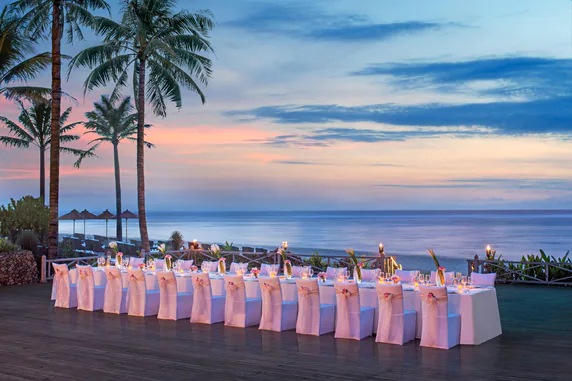
Why is Bali a Leading Destination for Corporate Event Spaces, and What Has Made Its Resorts Renowned Worldwide?
Discover why Bali is a top choice for corporate events, with world-class resorts and stunning venues that attract businesses from around the globe.
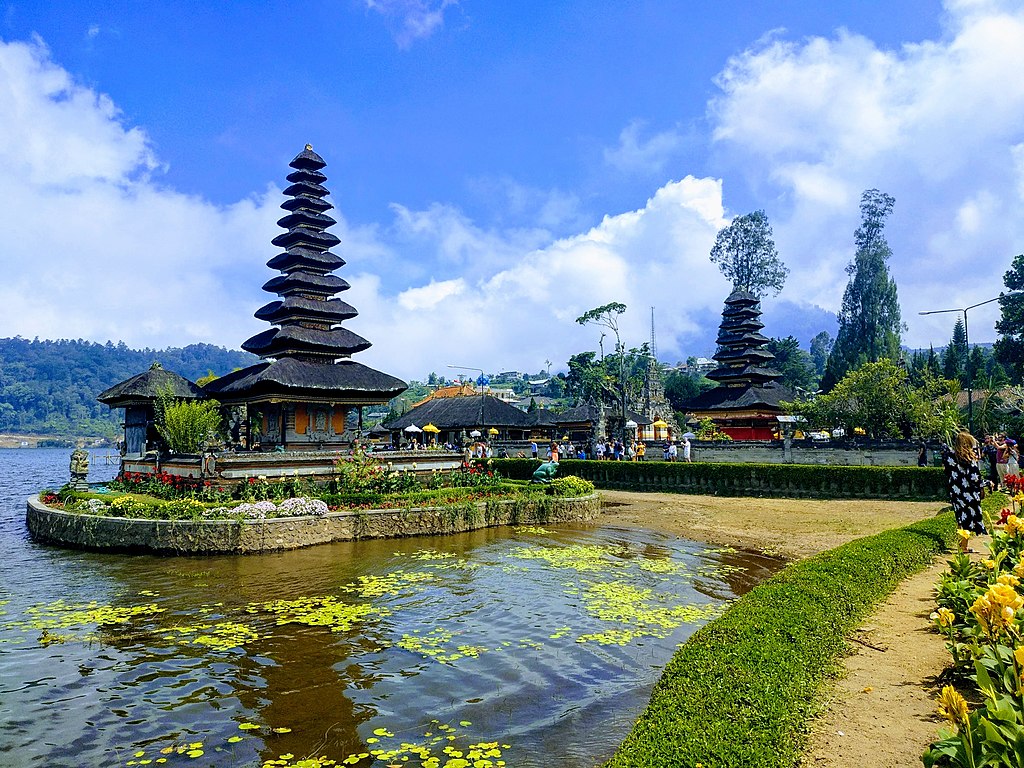
Corporate Incentive Travel Services in Bali: Why Bali Remains a Top Choice for Incentive Travel Planners
This article explores why Bali remains a top choice for incentive travel planners and highlights some of Indonesia’s hidden gems that deserve a spot on the radar of forward-thinking planners.